🏠 Upgrade your attic insulation and reduce energy loss year round.⚡
.jpg)
ATTIC VENTILATION
Attic Ventilation Solutions for Healthier, Energy-Efficient Homes
Proper attic ventilation is critical to protecting your home from heat buildup, moisture damage, mold growth, and premature roof failure. A well-designed ventilation system allows continuous airflow through the attic, helping regulate temperature and control humidity year-round. Attic ventilation is not just about adding vents — it’s about creating a balanced system of intake and exhaust that works together.
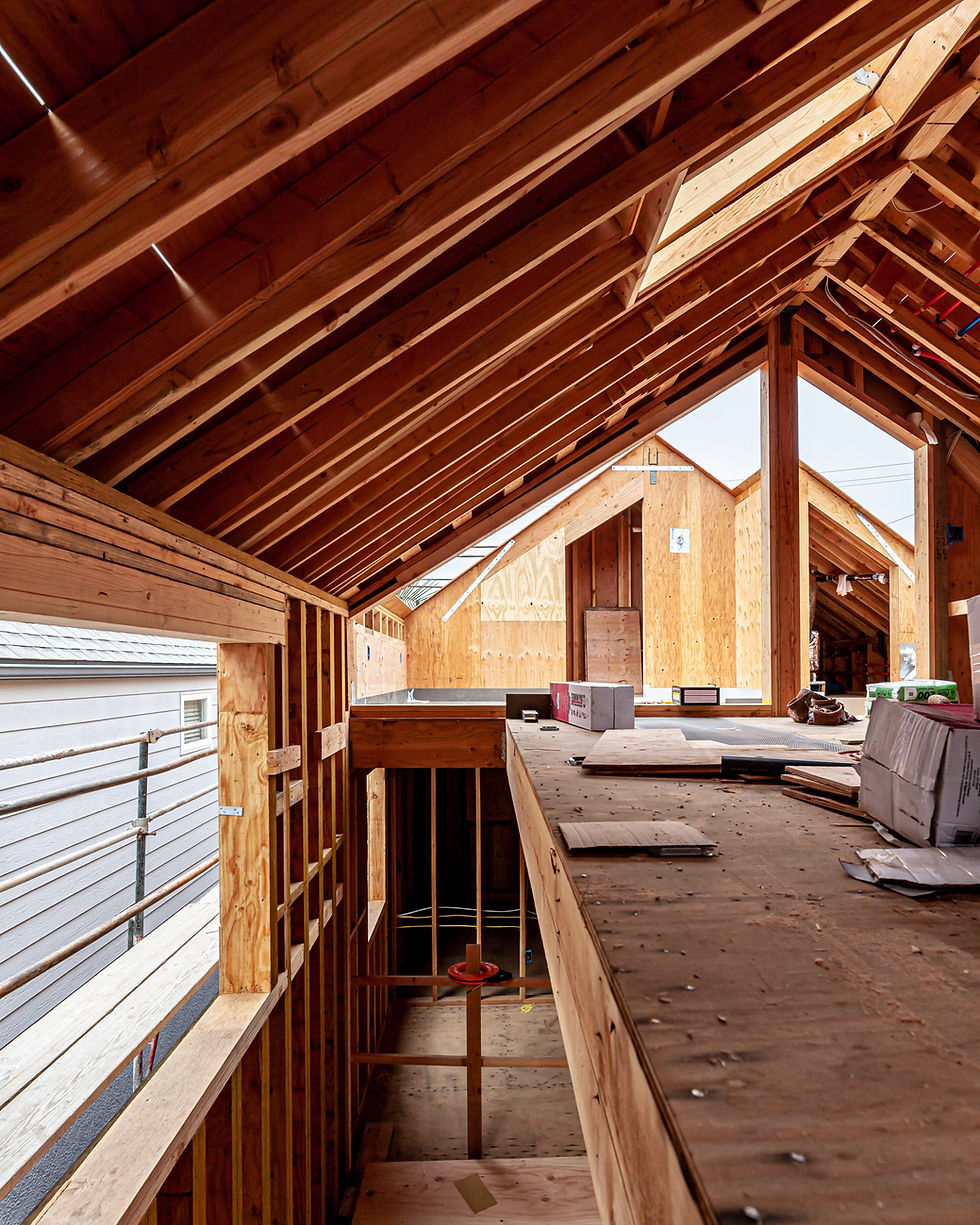


How Attic Ventilation Works
Attic ventilation operates on a simple principle:
• Intake vents bring fresh air into the attic at the lowest portion of the roof.
• Exhaust vents allow hot, humid air to exit at the highest point.
As warm air naturally rises, it escapes through exhaust vents. This upward movement pulls fresh air in through intake vents, creating continuous airflow throughout the attic space. Without proper balance, ventilation systems cannot function correctly.

INTAKE VENTILATION
Intake ventilation is installed at the lowest portion of the roof — typically at the soffits. Proper intake is essential. Without adequate intake air, exhaust vents cannot effectively remove heat and moisture.
COMMON TYPES OF INTAKE VENTS
Soffit Vents (Individual 16”x8” or similar)
• Installed under roof overhangs. One of the most common and effective intake options.
Continuous Soffit Vents
• Long, continuous vent strips installed along the eaves for uniform airflow.
Eave Vents
• Often found in older homes; allow air intake near the lower roofline.
PROPER INTAKE ENSURES
• Even airflow across the entire attic
• Reduced risk of condensation
• Improved performance of exhaust vents


What Is Net Free Area (NFA)?
Net Free Area (NFA) refers to the actual open area of a vent that allows air to pass through. It accounts for screens, louvers, and obstructions that reduce airflow. Ventilation requirements are based on NFA — not just the physical size of the vent.
For example:
• A 16”x8” soffit vent may have 128 square inches of gross area
• But only 60–65 square inches of Net Free Area
This difference is critical when calculating proper ventilation.

Ventilation Code Requirements
Building codes typically follow one of two standards
-
1/150 Rule
The attic must have 1 square foot of ventilation (NFA) for every 150 square feet of attic space.
-
1/300 Rule
If certain conditions are met (such as balanced intake/exhaust and vapor barriers), the requirement may be reduced to 1 square foot per 300 square feet of attic space.
Proper Balance
Ventilation should generally be split:
• 50% intake
• 50% exhaust
Too much exhaust without intake can pull conditioned air from the home.
Too little exhaust traps heat and moisture.
Proper NFA calculation ensures:
• Effective airflow
• Reduced condensation
• Compliance with building standards
Why Attic Ventilation Is So Important
Balanced ventilation works together with proper insulation and air sealing to protect the structure and improve comfort.
IN SUMMER
• Attics can exceed 150°F
• Heat radiates into living spaces
• Cooling costs increase
• Shingles age prematurely
IN WINTER
• Warm indoor air escapes into the attic
• Condensation forms on roof decking
• Mold and rot develop
• Ice dams can form

Signs Your Attic Ventilation May Be Inadequate
Condensation on roof decking
Mold growth in attic
Rusted roofing nails
Ice dams in winter
Excessively hot attic in summer
High energy bills
Our Attic Evaluation Process
We don’t guess. We calculate.
Our evaluation includes:
• Measuring attic square footage
• Calculating required NFA
• Inspecting intake vent quantity and condition
• Counting and evaluating exhaust vents
• Checking for blocked soffits
• Evaluating insulation and air sealing
• Identifying moisture sources (bath fans, leaks, air bypasses)
We then design a balanced ventilation plan specific to your home.
Ventilation Is Only Part of the System
Ventilation alone cannot fix every attic problem. It must work together with:
Proper Insulation Levels
Air Sealing
Moisture Control
Correctly Routed Bathroom Exhaust Fans
We address the attic as a complete system to ensure long-term performance.
